Septic Education • Fort Mill, SC
How Often to Pump a Septic Tank in Fort Mill, SC
An expanded guide to septic pumping frequency in Fort Mill: tank size, household size, garbage disposal use, water softener impact, and the inspection-based approach that ties pumping to actual tank condition rather than a guess.
- Typical pumping intervals for Fort Mill homes
- How household size and tank size interact
- How garbage disposals and softeners change the interval
- Inspection-based scheduling and what a pumper looks for
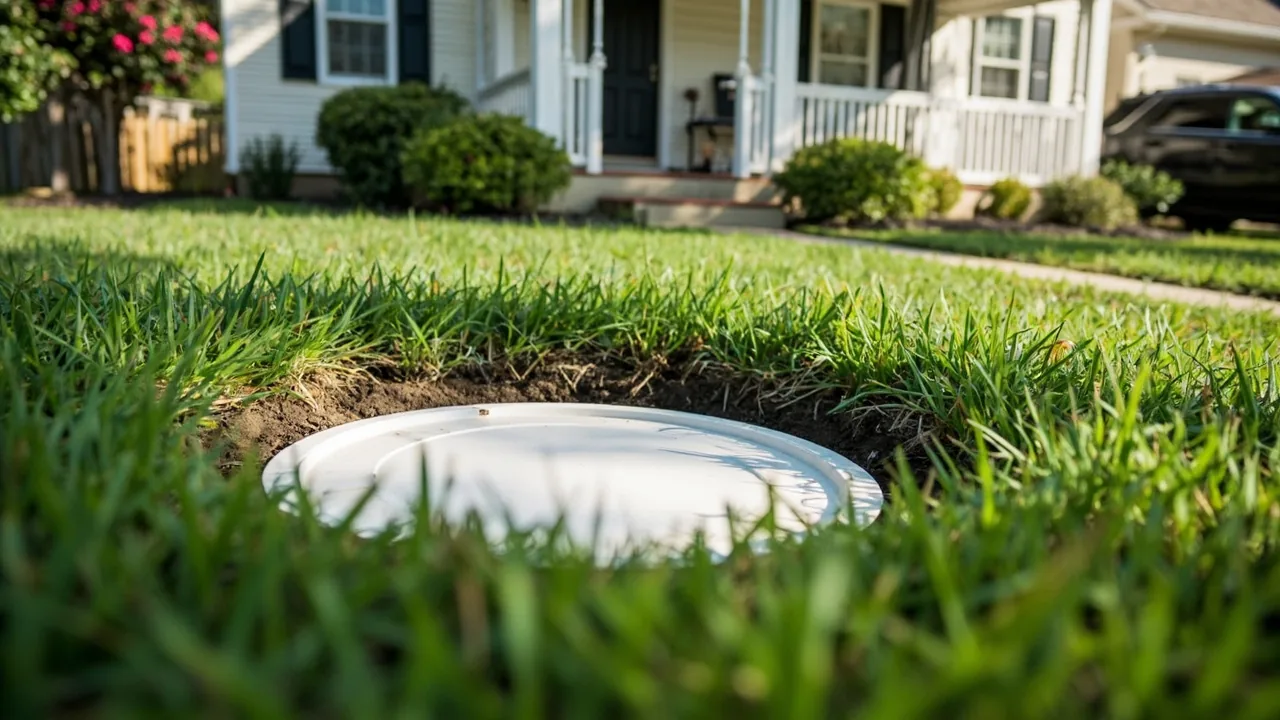 Representative project photo
Overview: How Often to Pump a Septic Tank in Fort Mill
How often to pump a septic tank in Fort Mill is not a single number. The interval depends on tank size, household size, water habits, garbage disposal use, water softener discharge, and what the tank shows on inspection. This page is a working guide for homeowners who want to set a realistic pumping interval and avoid both over-pumping (which costs money for no benefit) and under-pumping (which can lead to backups, odors, or field damage).
This is an educational local-service reference built around Fort Mill properties. It is not a substitute for an on-site inspection, and it does not pretend to give a final price online. Septic work depends on buried conditions, soil, access, permits, parts, equipment, and the actual failure point. The goal of this page is to help a homeowner sort the evidence, describe it clearly, and submit a request that a qualified local contractor can actually act on.
Why pumping frequency is not a single number
Septic tanks are designed to hold a certain amount of wastewater, and they separate solids from liquids by letting the solids settle and the liquids flow out to the drain field. The settled solids accumulate at the bottom of the tank, and the scum (fats, oils, and lighter solids) floats on top. Over time, the solids and scum build up, and the tank loses its effective capacity. The job of pumping is to remove the built-up solids and scum before the tank loses its effective capacity.
The interval at which the solids and scum build up depends on a lot of factors: tank size, household size, water use, garbage disposal use, water softener discharge, and what goes down the drain. A four-person household in a 1,000-gallon tank with no garbage disposal can often go 3-5 years between pump-outs. The same household with a garbage disposal may need pumping every 2-3 years. A six-person household in a 750-gallon tank with a garbage disposal may need pumping every 1-2 years.
The '3-5 years' rule of thumb is a starting point, not a final answer. The best way to set a pumping interval is to have the tank inspected at the first pump-out, and to ask the pumper what the tank looked like. The pumper can usually tell whether the interval should be shorter or longer based on the actual solids and scum levels.
- Tank size sets the upper bound on the interval
- Household size sets the water use and the solids load
- Garbage disposals add solids and shorten the interval
- Water softeners add water and can shorten the interval
Typical pumping intervals for Fort Mill homes
A typical Fort Mill home with a 1,000-1,250 gallon tank, 3-4 occupants, no garbage disposal, and a water softener that discharges to the septic system can usually go 3-4 years between pump-outs. The same home with a garbage disposal can usually go 2-3 years. A home with 5-6 occupants and a garbage disposal may need pumping every 1-2 years.
These are starting points, not rules. The actual interval depends on the home's water use, the tank's size, and what the pumper sees at the pump-out. A homeowner who is unsure can ask the pumper to inspect the tank at the first pump-out and to recommend an interval based on the actual condition.
A reasonable schedule for a Fort Mill home with no inspection history is to pump the tank within the first year of ownership (to establish a baseline), and then to pump based on the pumper's recommendation. If no recommendation is given, a 3-year interval is a safe default, with adjustments based on the factors listed above.
How household size and tank size interact
Household size and tank size are the two biggest factors in the pumping interval. A larger tank with the same household size will accumulate solids more slowly, and a smaller tank with the same household size will accumulate solids more quickly. A larger household with the same tank size will use more water and put more solids into the tank.
The design flow for a septic system is usually expressed in gallons per day (GPD), and a typical 3-bedroom home in Fort Mill is designed for about 300-450 GPD. A 4-bedroom home may be designed for 450-600 GPD. The design flow is the average daily water use the system can handle, and the pumping interval is tied to the design flow and the tank size.
A homeowner who is unsure about the tank size or the design flow can ask the pumper at the first pump-out, or can check the original permit if available. The York County environmental health office can also pull the permit record, which usually includes the tank size, the field size, and the design flow.
How garbage disposals and softeners change the interval
Garbage disposals add a significant amount of solids to the septic tank, and homes with disposals usually need more frequent pumping. The added solids come from food waste that would otherwise go into the trash or a compost, and the food waste breaks down more slowly than toilet paper or human waste. The result is a faster buildup of solids in the tank.
Water softeners add water to the septic system, and the added water can stress the field as well as the tank. Some water softeners discharge to a drywell or to the yard, and that is a different conversation. A water softener that discharges to the septic system is essentially adding extra water to the system on every regeneration cycle, and the system has to handle the extra load.
A homeowner with both a garbage disposal and a water softener should expect to pump more frequently than a homeowner with neither. The exact interval depends on the household size, the tank size, and the regeneration frequency of the softener, but a 2-3 year interval is a reasonable starting point.
Warning signs that mean pump sooner rather than later
The most common warning sign that a tank is overdue is slow drains. If the drains have been getting slower over weeks or months, and the home has not been pumped in several years, a pump-out is a reasonable first step. The slow drains may clear after pumping, and the homeowner can ask the pumper to recommend an interval based on the tank's condition.
Other warning signs include odors (in the home or in the yard), gurgling sounds, wet spots in the yard, and unusually green grass over the field. These symptoms can mean a tank issue, a field issue, or both, and a pump-out may not be the only response. The homeowner's job is to describe the symptoms to the contractor, and the contractor's job is to assess the system.
A pump-out is not a substitute for a diagnosis. If the symptoms are consistent with a tank issue, pumping is a reasonable first step. If the symptoms are consistent with a field issue, pumping may be part of the response but is not the whole response. The contractor can outline the options.
Inspection-based scheduling and what a pumper looks for
Inspection-based scheduling is the most accurate way to set a pumping interval. At the first pump-out, the pumper inspects the tank, measures the solids and scum levels, and notes any visible issues (cracks, baffle condition, water level, root intrusion). The pumper can then recommend an interval based on the actual condition, not a guess.
The pumper is looking for a few specific things. First, the solids layer at the bottom of the tank: if the solids layer is more than 1/3 of the tank's height, pumping is overdue. Second, the scum layer at the top of the tank: if the scum layer is more than a few inches, pumping is overdue. Third, the water level: if the water level is above the outlet, the tank is full or the outlet is restricted. Fourth, the baffles: if the inlet or outlet baffle is damaged or missing, it needs repair.
A homeowner who wants to set a realistic pumping interval should ask the pumper to inspect the tank and to recommend an interval. The recommendation may be 1 year, 2 years, 3 years, or longer, depending on the actual condition. The recommendation is a better starting point than a generic '3-5 years' rule of thumb.
Methodology: This page is an educational local-service reference for Fort Mill and the surrounding area. It summarizes common homeowner questions, repair decision factors, local property conditions, and estimate variables; an on-site contractor inspection is still required for exact pricing and scope.
Frequently asked questions
How often should I pump my Fort Mill septic tank?
There is no single number, but a typical Fort Mill home with a 1,000-1,250 gallon tank, 3-4 occupants, no garbage disposal, and a water softener that discharges to the septic system can usually go 3-4 years between pump-outs. Homes with garbage disposals or larger households may need more frequent pumping.
Should I pump on a schedule or based on inspection?
Inspection-based scheduling is more accurate. At the first pump-out, ask the pumper to inspect the tank and to recommend an interval based on the actual solids and scum levels.
Do garbage disposals change the pumping interval?
Yes. Garbage disposals add solids to the tank, and homes with disposals usually need more frequent pumping. A 2-3 year interval is a reasonable starting point for a home with a disposal.
What warning signs mean I should pump sooner?
Slow drains, odors, gurgling sounds, wet spots in the yard, and unusually green grass over the field are all signs that the system may be overdue. A pump-out is a reasonable first step, but a contractor visit may also be needed to assess the rest of the system.
Request a Septic Estimate
Tell us what is happening, where the property is, and how soon you need help. The goal is a complete, contractor-readable request — not a generic contact form.