Septic Repair • Indian Land, SC
Septic Repair Guidance for Indian Land, SC Homes
An estimator-ready guide to septic repair in Indian Land, SC: transition-zone subdivisions, pump-and-pressure systems, older rural tanks, and a request template a contractor can act on.
- Transition-zone properties near future sewer extensions
- Pressure-dose and mound systems in newer Indian Land neighborhoods
- Older conventional systems in established rural areas
- Estimator-grade request prep for Indian Land
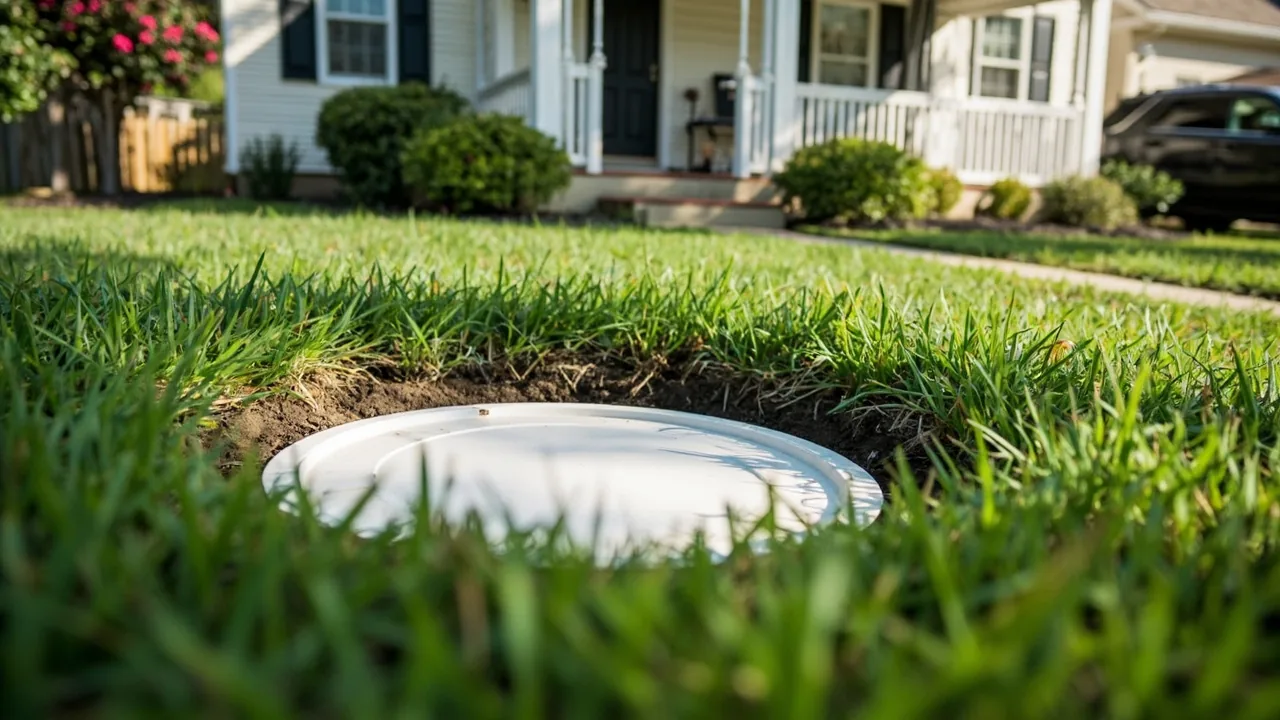 Representative project photo
Overview: Septic Repair in Indian Land, SC
Septic repair in Indian Land, SC is shaped by the area's split personality. Some of Indian Land is newer subdivision with builder-installed systems, some is older rural property on long-established tanks, and a lot sits in a transition zone where municipal sewer is creeping outward. The result is that an Indian Land repair call can mean very different things depending on the parcel, the home's age, and the system's design. This page is a working guide for homeowners who are starting to suspect a repair issue and want to describe it clearly.
This is an educational local-service reference built around Indian Land properties. It is not a substitute for an on-site inspection, and it does not pretend to give a final price online. Septic work depends on buried conditions, soil, access, permits, parts, equipment, and the actual failure point. The goal of this page is to help a homeowner sort the evidence, describe it clearly, and submit a request that a qualified local contractor can actually act on.
Why Indian Land septic repair is its own conversation
Indian Land covers a wide area east of Fort Mill along the Highway 521 corridor, and that corridor has changed a lot in the last 20 years. Newer subdivisions have brought city-water-style expectations, but the lots are still on septic, and the systems have to handle modern water use. Older pockets of Indian Land still have the original conventional systems from when the area was rural, and those systems were designed for a different household pattern.
The transition zone is where things get interesting. A neighborhood may have been built on septic with the expectation that sewer would arrive, and the conversion may be years away, partial, or stalled. In the meantime, the original septic system is aging, the home's water use has likely grown, and the homeowner is dealing with a system that is showing its age. The repair decision on a transition-zone property can include a long-term plan: do you repair the existing system, or do you wait for sewer and only keep the system functional in the meantime?
The other side of the Indian Land septic conversation is the rural side, where conventional gravity systems, older concrete tanks, and longer drain-line runs are still the norm. A repair in this part of Indian Land often starts with a question of basic access: where is the tank, when was it last pumped, and is there any record of its installation? Without that, the diagnosis takes longer and the repair estimate is harder to scope.
- Newer subdivisions often have pressure-dose or mound systems that need electrical components checked
- Older rural properties may have undocumented tanks and limited records
- Transition-zone properties may be planning around future sewer conversion
- Highway 521 corridor homes may sit on small lots with tight tank access
Common Indian Land septic repair symptoms
Slow drains and gurgling sounds are the most common Indian Land repair symptoms. In newer homes, these often point to a pump, a float, or an alarm on a pressure-dose system. In older homes, the same symptoms often point to a tank that is overdue for pumping, a clogged baffle, or a partially blocked line. The homeowner's description of the symptom usually gives the contractor a strong clue about which path to take first.
Wet spots in the yard are another common Indian Land symptom, especially after storms. Because Indian Land is a corridor that has been developed in phases, some neighborhoods have fields that were sized for a smaller home or a smaller household. When the home grows (additional bathrooms, finished basement, a separate apartment), the field may not have the capacity to keep up. The visible result is a recurring wet spot or a strip of unusually green grass over the field.
Sewage smell indoors or in the yard is a third common Indian Land symptom. Indoors, the smell often points to a dry plumbing trap, a cracked vent, or a venting issue that has nothing to do with the septic system at all. In the yard, the smell often points to surfacing wastewater, a loose lid, or a vent stack that is too close to a window. Sorting the cause takes a contractor visit, but the homeowner's description of where the smell is most often noticed is the best starting point.
Pressure-dose and mound systems in newer Indian Land homes
Newer Indian Land subdivisions often have pressure-dose systems or mound systems, both of which depend on a pump, a control panel, and an alarm. The pump pushes effluent from the pump chamber out into the field in controlled doses, which helps the field accept the water evenly. When the pump, the floats, the panel, or the alarm malfunctions, the system stops working as designed and the home can start to back up.
A pressure-dose system typically has an audible or visual alarm, and the alarm is often mounted on a wall in the garage, a utility room, or on the side of the pump chamber. The alarm sounds when the water level in the pump chamber rises above a set point, which usually means the pump is not keeping up or the floats are stuck. Homeowners sometimes silence the alarm without addressing the cause, which can lead to a sewage backup inside the home.
Mound systems in Indian Land are sometimes used where the natural soil is not deep enough for a conventional field, and they have a specific failure profile: surfacing at the edges of the mound, effluent breakout on the slope, and pump-side issues. Repair of a mound system is more involved than repair of a conventional system, and the contractor who works on it should be familiar with the local rules for mound systems.
Older systems and the rural part of Indian Land
Older Indian Land homes often have a conventional gravity system: a single-compartment or two-compartment concrete tank, a distribution box, and a gravity-fed drain field. These systems are durable, but they are not invincible. Concrete tanks can crack, baffles can deteriorate, distribution boxes can settle, and the field can saturate. Repair of a conventional system is usually more straightforward than repair of a pressure-dose system, but it still depends on access and soil.
The challenge on older Indian Land properties is documentation. Many older homes were built before current permit and inspection rules, so the original permit may not exist or may be incomplete. The homeowner may know the tank location by a marker in the yard, by a riser, or by a vague memory of where someone said it was. Locating the tank can take a contractor visit, and the homeowner can help by sharing any of those clues.
Another challenge on older Indian Land properties is renovation history. A home that has been added onto, finished in the basement, or had a garage converted may have plumbing that does not match the original design. The number of bedrooms (which often sets the system's design flow) may not match the original permit. A contractor working on an older Indian Land home will often ask about the home's history, and the answers can change the scope of the repair.
Repair, pumping, or replacement: how to think about it
Indian Land homeowners sometimes delay because they are worried every septic symptom means full replacement. That is not always true. Some issues are maintenance problems, some are component problems, and some are real replacement questions. The trick is to get a contractor to look before the homeowner commits to either a pump-out or a full replacement, because the wrong first step can leave the underlying problem in place.
A reasonable rule of thumb is: if the symptom is consistent with a full tank, pump first and see if it returns. If the symptom recurs quickly, the next step is a diagnosis visit. If the symptom includes surfacing wastewater, a strong outdoor odor, or an active alarm, skip the pump and go straight to diagnosis, because the underlying problem is not in the tank.
For Indian Land homes in the transition zone, the long-term plan can change the short-term decision. A homeowner who expects sewer within a few years may choose to keep the existing system functional with a low-cost repair, while a homeowner who expects to be on septic for the long term may choose a more durable repair or a planned replacement. These are not decisions a contractor can make for the homeowner, but the contractor can outline the options.
Documentation that helps on an Indian Land repair visit
Documentation on an Indian Land repair can include the original permit (if available), the last pump record, any inspection reports, photos of the yard, photos of the alarm panel (if any), and a note about the home's renovation history. For a pressure-dose system, the panel model and the pump model are also useful, because the contractor can bring the right replacement parts.
If the home is in a transition-zone neighborhood, a quick call to the local water and sewer authority may tell the homeowner whether sewer extension is on a published timeline. That information is not required for the repair, but it can change the homeowner's decision on how aggressive the repair should be.
A simple property sketch is also useful. Marking the suspected tank location, the suspected field location, the well (if any), the driveway, the side yards, and any gates or tight corners gives the contractor a working map. The map does not have to be to scale. It just has to communicate the layout faster than a phone call can.
Putting together the Indian Land estimate request
The best estimate requests for an Indian Land property include the symptom, the timing, the home's plumbing layout, any past service, the suspected tank location, the last pump date, the property's access notes, and the home's renovation history if relevant. Photos of the yard, the alarm panel, the suspected tank area, and the affected indoor fixtures can all help.
For a pressure-dose or mound system, the request should also include the panel model, the pump model (if known), the date the alarm last triggered, and any error codes or lights on the panel. These details help the contractor decide whether the visit is a pump-side issue, a field-side issue, or a control-panel issue.
Finally, the request should make clear whether the homeowner is looking for emergency mitigation, diagnosis only, full repair pricing, or replacement planning. Different goals lead to different visits, and naming the goal up front makes the response more useful.
Methodology: This page is an educational local-service reference for Indian Land and the surrounding area. It summarizes common homeowner questions, repair decision factors, local property conditions, and estimate variables; an on-site contractor inspection is still required for exact pricing and scope.
Frequently asked questions
Is Indian Land septic repair different from repair in central Fort Mill?
Indian Land includes a mix of newer subdivisions and older rural properties, and the repair approach can be different for each. Newer homes often have pressure-dose or mound systems with electrical components; older homes often have conventional gravity systems with documentation gaps.
How do I know if my Indian Land home is on a pressure-dose system?
A pressure-dose system usually has a pump chamber with a control panel and an alarm, often mounted on a wall in the garage, a utility room, or on the side of the pump chamber. The alarm is the easiest way to tell.
Should I pump first or request an Indian Land diagnosis?
If the tank is overdue and the symptoms are consistent with a full tank, pumping may be the right first step. If symptoms include an active alarm, surfacing wastewater, or recurring backups after pumping, diagnosis should come first so the underlying problem is not missed.
What documentation helps a contractor on an Indian Land repair?
The original permit (if available), the last pump record, any inspection reports, photos of the alarm panel and yard, and a simple property sketch all help. For pressure-dose systems, the panel and pump models are also useful.
Request a Septic Estimate
Tell us what is happening, where the property is, and how soon you need help. The goal is a complete, contractor-readable request — not a generic contact form.